Mental Health Matters: My Journey and Advocacy
Mental Health, Motherhood, Advocacy, Black Women
Why Mental Health Matters: My Journey, My Calling, and a Mission to Break the Silence
This is the story of how I unexpectedly stepped into the world of mental health, how it broke me open and rebuilt me, and why I now believe with my whole chest that mental health matters—especially for women, mothers, and Black and Nigerian communities who’ve been told to “just be strong” for far too long.
How I Unexpectedly Walked into the Mental Health Field
If you had told me in early 2022 that by December I’d be working in mental health, I would have laughed and changed the subject. I didn’t grow up dreaming of being a therapist, a counselor, or anything close. Like many of us, I was raised to believe you just push through, pray harder, and keep it moving. Feelings? We didn’t have time for that. Therapy? That was for “other people.”
But around December 2022, life did what life does—it interrupted my plans and quietly redirected my steps. A job opportunity came up in the mental health field. Honestly, at first it was simply that: an opportunity. A way to support my family, to show up as a responsible adult, to do “good work” and pay the bills. I didn’t realize it would become the doorway into a whole new mental health journey—not just for the people I’d serve, but for me too.
I walked in thinking I was just starting a job. I had no idea I was walking straight into my calling.
Sitting with Real People and Real Pain
The first time I sat across from someone battling serious mental health challenges, I remember feeling two things at once: deep compassion and deep helplessness. Here was a human being, not a diagnosis, not a label—just someone’s child, someone’s parent, someone’s friend—carrying more than their nervous system was built to hold. Anxiety that wouldn’t let them sleep. Depression that made getting out of bed feel like lifting a mountain. Voices they heard that no one else could hear. Thoughts of ending it all because the pain felt too heavy, too constant, too loud.
Working closely with individuals facing these kinds of serious challenges stripped away every stereotype I didn’t even know I still carried. Mental illness stopped being an abstract idea and became faces, names, stories. It became the man who hadn’t smiled in months but cracked a joke in session. The young woman who felt broken because she couldn’t stop crying, even though everyone around her kept saying she had “nothing to be sad about.” The mother who felt guilty for needing medication to get through the day, as if taking care of her brain somehow made her a weaker mom.
Being invited into that kind of raw, unfiltered pain is humbling. It made me realize that mental health matters not as a trendy phrase on social media, but as a literal matter of life and death, of dignity and survival, of whether people feel seen or invisible in their own suffering.
Finding My Voice as a Mental Health Advocate
Somewhere along the way, something shifted. I stopped feeling like an outsider “working in mental health” and started realizing that this space was calling me deeper. I wasn’t just clocking in and out; I was being changed from the inside. I started reading more, learning more, asking more questions. I found myself getting fired up when I heard people casually dismiss depression as laziness or anxiety as “overreacting.” I felt a righteous anger when I heard someone say, “Black people don’t get depressed” or “Nigerians don’t do therapy.”
That’s when I realized I wasn’t just in this field by accident. I was developing a deep passion for mental health advocacy. I wanted to be a voice that said, “No, we do struggle. We do break. We do cry. And we also deserve help, healing, and compassion.” I wanted to stand in the gap between what our communities have been taught and what we actually need to survive and thrive. I wanted to say out loud, with no shame, that going to therapy or taking medication or needing support doesn’t make you weak. It makes you human.
The Messy, Honest Realities of Working in Mental Health
I wish I could say it’s all breakthroughs and healing moments, but that wouldn’t be honest. The realities of working in mental health are messy, emotional, and sometimes heartbreaking. There are days when a client doesn’t show up, and you worry about where they are and whether they’re safe. There are sessions where someone sits across from you and says, “I don’t want to be here anymore,” and you feel your own heart drop into your stomach as you calmly walk them through safety planning, even while you’re praying silently, “God, please keep them.”
There are difficult client situations that stay with you long after you leave the office. The mother who’s doing her best but is drowning in postpartum depression, trying to care for a baby while she feels like she’s disappearing. The teenager who can’t talk to their parents about their panic attacks because “in this house we don’t talk about such things.” The man who finally opens up about childhood trauma and then feels so exposed that he shuts down for weeks afterward. You carry these stories. Sometimes you carry them in your body—tight shoulders, headaches, that heavy feeling in your chest that doesn’t quite go away when you clock out.
And yet, in the middle of the hard, there are sacred moments. Moments when someone says, “This is the first time I’ve ever said that out loud.” Moments when a client who once felt hopeless tells you, “I had a bad day, but I used the coping skills we talked about.” Moments when you see even a tiny shift—a little more light in their eyes, a little more gentleness in the way they speak to themselves. Those moments remind me why I stay, why I keep showing up, and why this work is worth it, even when it hurts.
Breaking Stigma in Nigerian and Black Communities
As a Black woman and a Nigerian woman, this part is deeply personal. I grew up hearing phrases like, “You better be strong,” “Stop crying, you’re not the first person to go through this,” or “Just pray about it.” And listen, I believe in prayer. I believe in faith. But I also believe that God created therapists and doctors and medication and safe spaces for a reason. We can hold our faith in one hand and our need for support in the other. They are not enemies; they can work together.
The stigma in many Nigerian and Black communities runs deep. We’re taught to keep family issues inside the house, to protect our image, to never let anyone see us struggle. But the cost of that silence is high. It looks like aunties who never heal from trauma, uncles who drink to numb their pain, mothers who carry silent depression for decades, and young people who feel alone in their anxiety because “nobody else talks about this.” Breaking stigma isn’t just a nice idea—it’s an act of survival and liberation for us.
My mission is to help us unlearn the lie that needing help is shameful. I want us to start saying things like, “I’m going to therapy,” the same way we say, “I’m going to the dentist.” I want our children to grow up in homes where they can say, “I feel sad,” or “I feel overwhelmed,” without being dismissed. I want us to normalize conversations about anxiety, depression, trauma, and healing in our churches, our group chats, and our living rooms. Because mental health matters for us too. Especially for us.
Motherhood and Mental Health: The Weight We Don’t Talk About Enough
Let’s talk about motherhood and mental health, because whew—this one is real. Motherhood is beautiful, yes. It’s sacred, yes. But it can also be exhausting, lonely, overwhelming, and triggering. There’s the constant pressure to be everything to everyone: the present mom, the supportive partner, the dutiful daughter, the reliable friend, the career woman, the woman who somehow also has time for self-care, a clean house, and a flat stomach. It’s unrealistic, and yet many of us are silently trying to live up to it every single day.
Working in mental health while being a mother has forced me to confront my own limits. I can’t pour into others if I’m running on empty. I can’t tell clients to rest when I refuse to rest myself. I can’t talk about boundaries while saying yes to everything and everyone except me. So I’ve had to learn to ask for help, to say, “I’m not okay today,” to admit when I’m overwhelmed. And let me tell you, that vulnerability doesn’t always come naturally, especially when you’re used to being the “strong one.”
But I am learning that my children don’t just need a perfect mom—they need a present, honest, emotionally healthy mom. They need to see me rest, apologize, cry, and get back up. They need to see that taking care of your mind is just as important as taking care of your body. And if you’re a mother reading this, please hear me: your mental health matters. You are not selfish for needing time, space, therapy, medication, or support. You are human, and you are worthy of care too.
A Calling to Help Others Find Healing and Support
The more I walk this path, the more I realize: this isn’t just a career for me. It’s a calling. I feel called to stand in the uncomfortable spaces, to sit with people in their darkest moments, and to gently remind them that darkness is not the end of their story. I feel called to keep learning, keep growing, and keep using my voice to push back against shame and silence in our communities. I feel called to say, over and over again, “You are not crazy. You are not alone. You are not beyond help.”
My mission is simple but deep: to help others find healing and support in whatever way I can. Sometimes that looks like sitting with a client and helping them breathe through a panic attack. Sometimes it’s educating a family about what depression really is. Sometimes it’s sharing my own story so another woman, another mother, another Black or Nigerian person feels less alone in theirs. Sometimes it’s just holding space—quiet, nonjudgmental, compassionate space—for someone who has never had that before.
If You’re Reading This, This Is for You
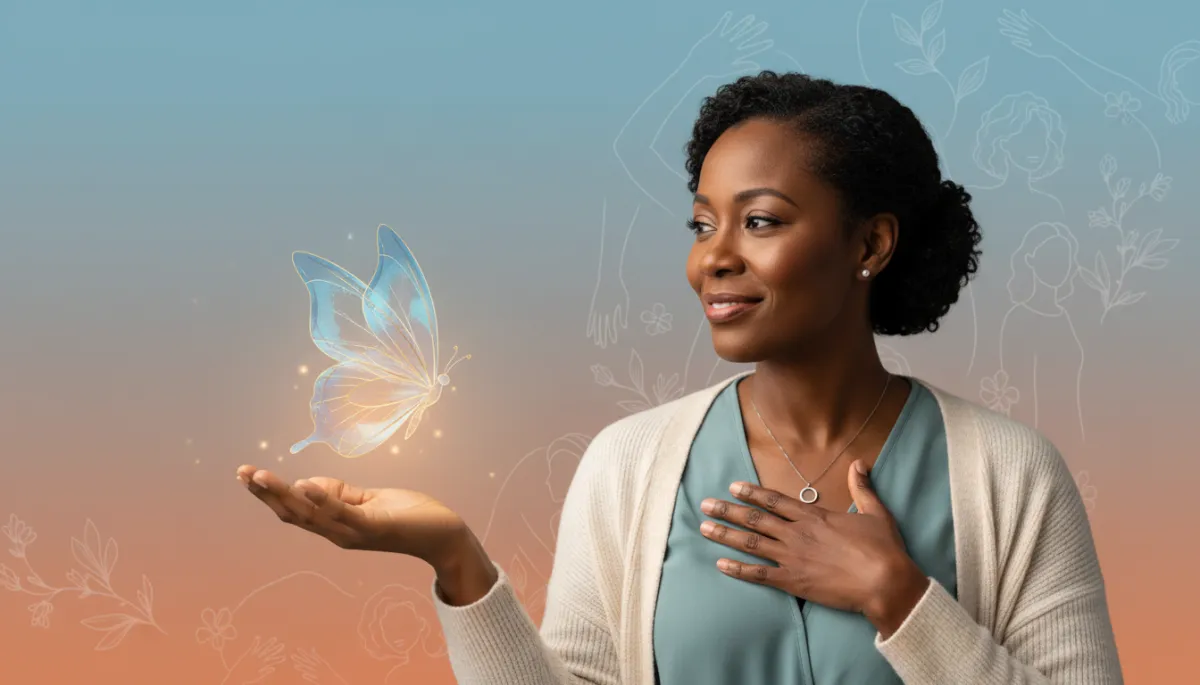
If you’ve made it this far, I want you to pause and put a hand over your heart for a moment. Feel it beating. That heartbeat is proof that your story is still unfolding. Maybe you’re a mother who’s tired but afraid to say it out loud. Maybe you’re a Black woman who’s been the strong friend for so long that you don’t even know how to ask for help anymore. Maybe you’re Nigerian, carrying years of “don’t talk about it” on your back. Maybe you’re simply someone who’s been wondering if what you feel is “enough” to seek help.
Let me say this clearly: your pain is valid. Your exhaustion is valid. Your confusion, your questions, your numbness, your tears—they are all valid. You don’t have to wait until you’re at rock bottom to reach out. You don’t have to prove your suffering to deserve support. You don’t have to carry it all alone. This is your gentle reminder that mental health matters—not just for “people out there,” but for you, right here, right now.
My mental health journey started unexpectedly in December 2022, but I believe it was always part of the plan. It led me to rooms full of pain and resilience, to stories that cracked me open, to a passion for mental health advocacy that I can’t ignore. It led me to confront my own beliefs as a Black Nigerian woman and a mother. And it led me here, to you, sharing this from my heart with the hope that something in these words gives you permission to seek what you need.
May we be the generation that chooses healing over hiding, honesty over pretending, and support over silence. May we raise children who know that asking for help is a strength, not a weakness. May we, as women, as mothers, as Black and Nigerian communities, finally believe that our mental health matters just as much as anyone else’s—and act like it.